
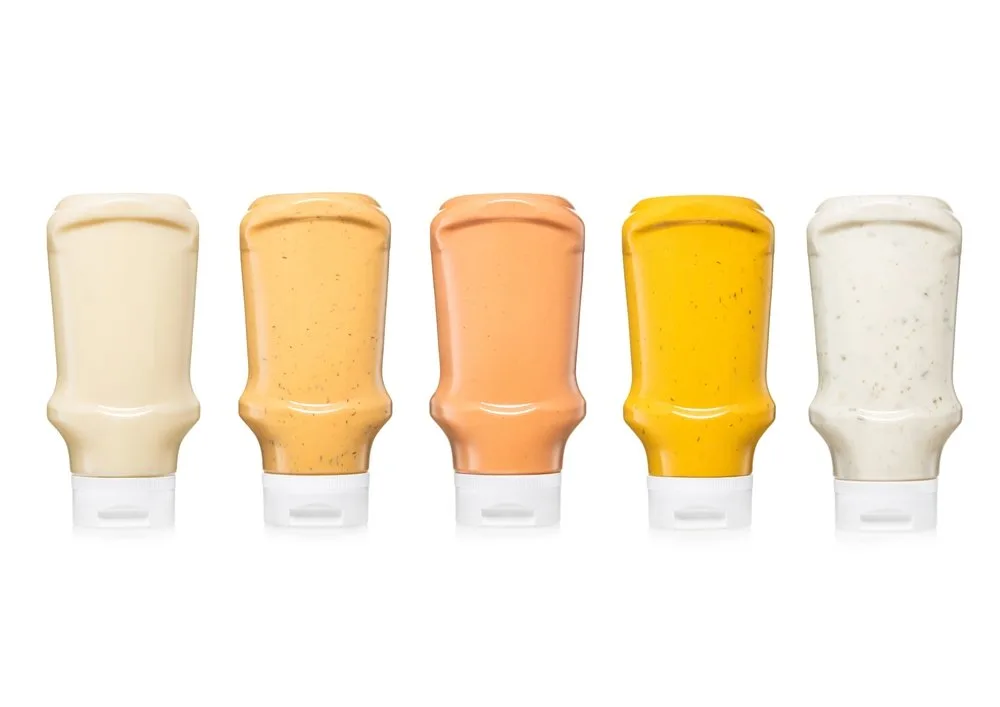
Salad dressing and condiment loads
A pallet of dressing cups and a drum of the same formula are not the same pickup. This page is for a U.S. plant or warehouse moving salad dressing and condiment loads, not a kitchen bottle. It sits under Bulk Mayo and Dressing — Industrial Recycling.
Tell us what you need to move and when. Looped can review one load or help plan recurring pickups.
Finished cups, bottles, and cases overlap packaged food. If the lot is retail-packed, also see the food waste page. If the lot is bulk paste in totes or drums, stay on this page and on the mayo and dressing page. If the same dock holds mayonnaise totes, describe that stream on Bulk mayonnaise pickup for manufacturers rather than blending the counts.
Name the labeled product. The Census class for mayonnaise, dressing, and other prepared sauces sits on the mayo and dressing page. Do not force that label onto a lot that is salsa, ketchup, or gravy.
How Dressing and Condiment Loads Differ
FDA's 21 CFR 169.150, still in force in 2026, defines salad dressing as an emulsified semisolid food with a starchy paste. It contains at least 30 percent vegetable oil by weight and a minimum egg-yolk solids level tied to 4 percent by weight of liquid egg yolks. Mayonnaise under 21 CFR 169.140 requires at least 65 percent oil and does not use that starchy paste.
Many plant condiments are not salad dressing under that rule. Vinaigrettes, emulsified sauces, mustard, soy sauce, and other condiments still move as bulk or packaged loads. Use the name on the lot label.
The oil and starch share, when they apply, change viscosity. Tell the pickup team whether the product pours, scoops, or stays in cups.
Do not say whether the lot is safe to eat. If a quality hold, date code, or recall blocks shipment as food, say it is on hold and what record the team needs. Recall-plan duties sit on the mayo and dressing page.
Cups, Bottles, and Cases on Pallets
Retail cups, portion packs, bottles, jugs, and cases are packaged food even when the formula is dressing. Count pallets, cases, and units the way the warehouse already counts them. Note stretch wrap, crushed corners, leaking cups, and whether cases are display-ready.
Photos of a case label and of the pallet stack help. Include the pack size that appears on the case. Send lot codes privately.
Outer corrugated and inner plastic are packaging streams. If the plant wants those materials described separately from the food, say so and use traditional recycling language for empty packaging only.
Leaking cups turn a dry pallet into a slip hazard. Overwrap or re-stack leaking cases before a trailer is booked if the plant's own rules require a dry dock. OSHA's 2016 rule at 29 CFR 1910.22 requires walking-working surfaces to be kept free of spills and floors to be kept clean and, where feasible, dry.
Hypothetical: a warehouse has 14 pallets of 1.5-ounce salad-dressing cups, stretch-wrapped, with two pallets showing crushed cases and seepage. The request counts 14 pallets, flags the two wet pallets, and asks whether those two should move on a different day. That example is invented.
Packaged condiment lots belong in the same conversation as other packaged food when the trailer is a pallet trailer. See food waste. Keep bulk drums off that trailer description unless a private review says to combine them.
Bulk Dressing in Drums or Totes
Bulk salad dressing and other condiments in totes, drums, or tanks follow the bulk-liquid pattern. Say vessel type, plastic or steel, sealed or open, leaking or sound, palletized or loose. Say whether a pump or a forklift will load the lot.
Salad dressing that meets 21 CFR 169.150 contains starch and at least 30 percent oil. It may pump more readily than mayonnaise, or it may not, depending on the formula. Do not guess.
State whether the plant's own transfer method is a pump, a tote swap, or a fork of sealed vessels. Logistics and equipment is the live page for trailer and container needs.
Empty drums are packaging. Residue, rinse status, and drum material belong in the request. Do not add sanitizer to a dressing tote to thin it. FDA's 2015 rule at 21 CFR 117.35 requires toxic cleaning compounds and sanitizing agents to be stored so they do not contaminate food or packaging.
Keep bulk dressing out of the sewer. Pretreatment rules and EPA's Wasted Food Scale sit on the mayo and dressing page. Follow the plant wastewater permit.
Ask the sewer authority in writing before anyone treats a drain as disposal. This guide does not provide dump methods.
Keep lids on drums in the hold lane. If vessels sit outdoors, use coverings and pest checks around those bulk vessels.
Mixed Lots, Labels, and Holds
A dressing plant often has more than one pack style ready on the same week. Cups, bottles, drums, and mayonnaise totes are separate lines in the request even if they share a SKU family. Count each line. Note which dock door each line can use.
Label errors, short dates, and promotional overbuilds are common warehouse reasons a finished condiment pallet cannot ship as first-quality goods. State the hold reason only as far as it helps planning. If the lot is under a recall, say that privately and point to the record the plant needs.
A ticket records weight. It does not certify what was in the cups. How net is calculated sits on the mayo and dressing page.
Hypothetical: a plant stages six totes of bulk ranch-style dressing at dock 1 and eleven pallets of the same formula in bottles at dock 4. Dock 1 takes a pump appointment. Dock 4 takes a dry van.
The request lists two appointments, two counts, and one city and state. That example is invented.
If cardboard bales or empty drums are also ready, put them on a packaging line rather than inside the dressing count. Traditional recycling covers those materials. Reporting covers the shipment record after the trailer leaves.
What to Send With the Request
A complete dressing or condiment request reads like a dock walk: material name as labeled, pack style, amount, city and state, timing, and dock limits.
Material name
Say salad dressing, vinaigrette, mustard, soy sauce, or the actual label. If several formulas share a trailer, list them. Do not collapse them into a vague "sauce" if the pack or viscosity differs.
Packing and amount
Say cups, bottles, cases, pallets, totes, or drums. Give pallet or vessel counts. Add a stated weight from plant records if it exists. Photos of one case and one pallet, or of one tote lid, are enough to start.
Timing and dock
Give the ready date and the must-leave date. List hours, appointment rules, trailer length, liftgate, pump, forklift, and whether a drop trailer can sit. If cups cannot freeze or bake in a yard trailer, state the plant's written temperature rule. This page does not invent a setpoint.
Ask whether the provider will split packaged pallets from bulk drums, and what document the plant receives. Send commercial questions through contact. Salad dressing and condiment lots move as food waste loads. This page is the packing guide for those lots.
Request a Pickup Review
Request a pickup review at contact. See about for the company. This page is not a quote, a permit, or a disposal approval.
Send privately:
- Material name as labeled, including salad dressing or another condiment
- How it is packed: cups, bottles, cases, pallets, totes, or drums
- Amount: count, stated weight, or both
- City and state
- Timing, including the date the lot must leave
- Dock limits: hours, trailer type, pump or forklift needs, and any access rules
Sources
- Salad dressing, 21 CFR 169.150. National Archives (eCFR). https://www.ecfr.gov/current/title-21/chapter-I/subchapter-B/part-169/subpart-B/section-169.150. Accessed 2026-11-23.
- Mayonnaise, 21 CFR 169.140. National Archives (eCFR). https://www.ecfr.gov/current/title-21/chapter-I/subchapter-B/part-169/subpart-B/section-169.140. Accessed 2026-11-23.
- Walking-working surfaces, 29 CFR 1910.22. National Archives (eCFR). https://www.ecfr.gov/current/title-29/subtitle-B/chapter-XVII/part-1910/subpart-D/section-1910.22. Accessed 2026-11-23.
- Sanitary operations, 21 CFR 117.35. National Archives (eCFR). https://www.ecfr.gov/current/title-21/chapter-I/subchapter-B/part-117/subpart-B/section-117.35. Accessed 2026-11-23.
Start with the material, how it’s packed, the amount, the facility location, and when it needs to move.
Request a pickup review